

Has your house settled and needs straightening?
Unfortunately, settlement damage is quite common and can show up in many different ways. Signs may include sloping floors, cracks in the façade or foundation walls, cracks indoors, misaligned windows that are difficult to open or doors that stick. In some cases, the entire house may lean or appear uneven.
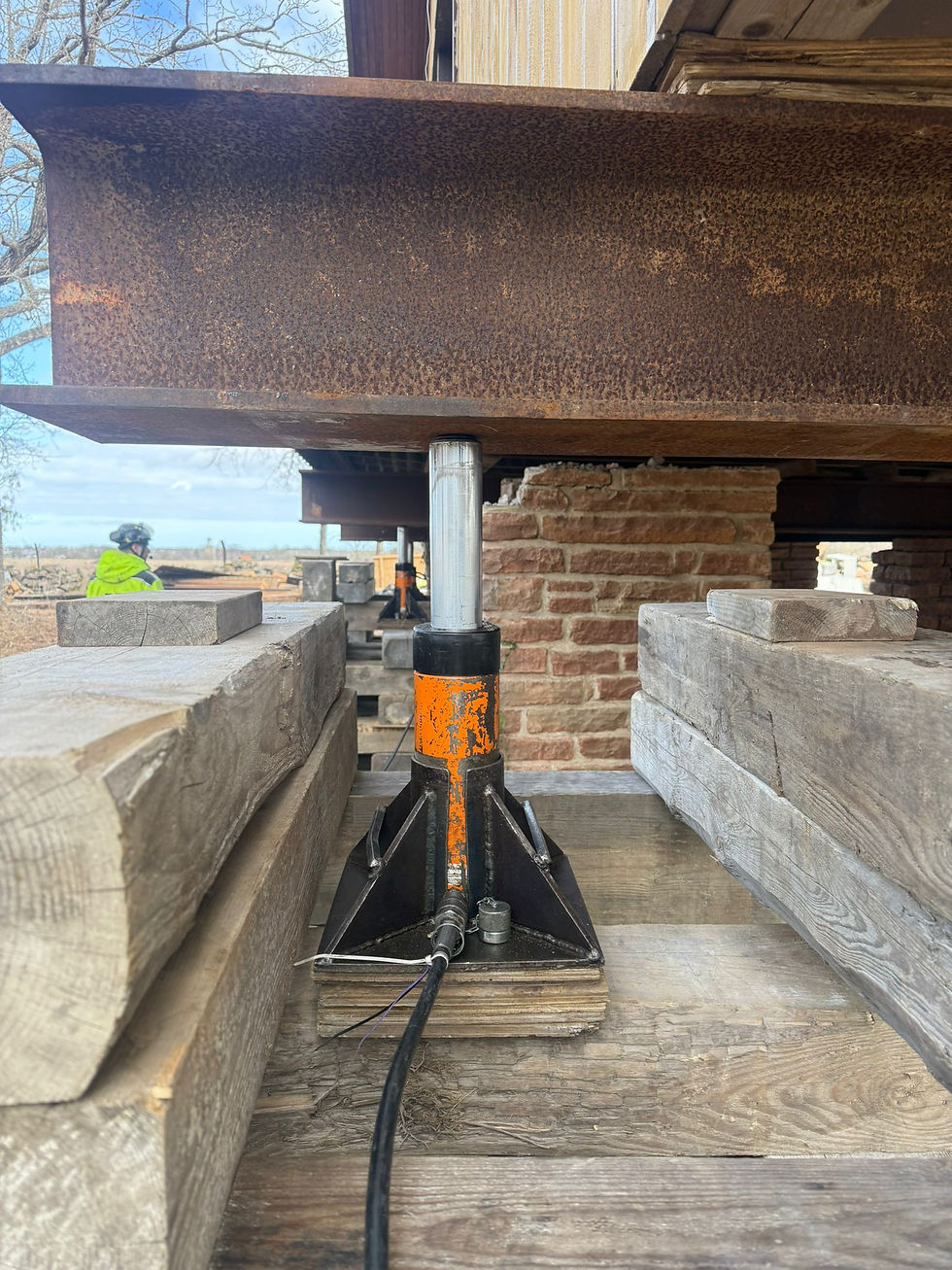
We have many years of experience repairing settlement damage and can help you stabilise the foundation and level your house safely. The key to the solution is almost always to stabilise the building's foundation. Depending on the conditions, this can be done in different ways, for example using hydraulic jacks, temporary supports or other proven methods.
One of the most important things we've learned over the years is that the earlier settlement is detected and addressed, the simpler and less costly the solution will be.
How do I know when I should seek help for foundation settlement?
All houses move slightly over time, and not every crack or movement means that something is wrong. However, there are certain signs that should be taken seriously.
You should contact us if you notice any of the following:
-
Windows and doors that become increasingly difficult to open or close. This may indicate that the structure has become distorted due to settlement.
-
Cracks that grow or increase in number. Small cracks can be normal, but if they become wider or new cracks continue to appear, it may indicate that the house is still moving.
-
The house is leaning or visibly uneven.
-
Floors that slope enough to be noticeable when walking on them.
-
Cracks in the foundation, façade or plinth should always be checked.
-
Gaps between walls, ceilings or trim that continue to widen over time.
In short: if the changes become more noticeable over time or affect how the house functions, it's a good idea to have the problem assessed by a professional


Common causes of building settlement
There are several reasons why a house or other building may begin to settle.
Some of the most common are:
-
Soil changes, such as frost heaving, sinkholes or clay shrinkage
-
Changes in groundwater levels
-
Climate impacts, such as floods or heavy rains
-
Vibrations from nearby traffic or construction
-
Leaking sewer or water pipes near the building
-
Inadequately or incorrectly built foundation
-
Tree roots affecting the ground around the house
How does it work when we fix a settlement?
1. Initial consultation
We begin with a meeting by phone, Teams or a similar platform to discuss the settlement problem. We encourage you to send us photos or videos of the damage, along with information about the type of house, foundation and site conditions. Together, we build a picture of the extent of the problem and what may be causing the settlement.
After the meeting, you'll receive an initial cost estimate for correcting your house.
2. Site visit and planning
Once you decide to move forward, we carry out a site visit. We assess the settlement in more detail and investigate its cause and effects.
3. Free quotation
You'll receive a clear, free quotation outlining all parts of the project and the total cost. We'll also explain how you may be able to use the Swedish ROT tax deduction towards the labour costs.
4. Project start and execution
Once you decide to move forward:
-
We take overall responsibility for the project
-
We coordinate with trusted partners
-
We manage the project from start until the settlement has been corrected
Sit back while we take care of the settlement.
Our view on injection solutions
You may have read about injection solutions, such as geopolymer injection, and been given the impression that they are a universal solution that promises the world. We are often asked whether we at Heavy Logistics use this method, and the answer is no. There are several reasons for this.
Geo-injection is a broad term for different materials and chemicals that can vary in their environmental impact. What they have in common is that it can often be difficult to fully control how the injected material spreads through the ground and how reliable the final result will be.
We always want to have full control over the work we carry out and be able to stand behind the solution and its performance, for both your sake and ours.